Egg and sperm bank

Egg and sperm bank
Our own bank of eggs and sperm,
with traceability and safety at every stage.
Science advances when it becomes real access for those who need it. That's why we maintain our own bank of eggs and sperm: a structure designed so that the path to treatment is as responsible as the care that surrounds this decision.
Each donation begins with someone who makes a conscious, voluntary choice to make this path possible for another person - without any commercial character, as required by Brazilian law. Before it reaches you, every donation goes through clinical, laboratory, and psychological evaluation, and anonymity between donor and recipient is guaranteed at every stage.
We bring together eggs and sperm through three modalities:
Shared donation - patients undergoing assisted reproduction treatment at the Institute may donate part of the eggs retrieved during their own procedure, subject to evaluation and criteria set by the medical team.
Solidarity donation - people with no treatment of their own donate voluntarily, after complete clinical, genetic, and psychological evaluation.
Donation between relatives - allowed between relatives up to the fourth degree, provided there is no consanguinity between donor and recipient.
Regardless of origin, every donation goes through the same screening process before becoming available. This is how we uphold, with technical rigor, a real path for those building their family through donated eggs or sperm.
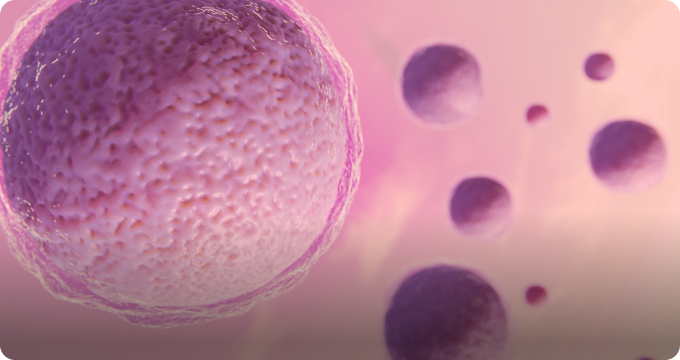
Eggs
Who may consider receiving donated eggs
There are different paths that lead here, driven by distinct clinical or family circumstances:
- Women with ovarian failure or low ovarian reserve, when their own eggs are not available in sufficient quantity or quality.
- Women of more advanced reproductive age, since fertility and egg quality tend to decline over time.
- Male couples and single men pursuing solo fatherhood, for whom egg donation is part of the treatment itself.
- Trans people whose capacity to produce their own eggs was affected by hormone therapy or surgical procedures.
In all cases, each situation is evaluated individually to define the best path.
Where to start
The path varies depending on your situation.
If you're already in treatment and received a result indicating the need for donated eggs, the next step follows within your current treatment flow, guided by our multidisciplinary team.
If you're not yet a patient, the process usually begins with a conversation with our psychology team specialized in human reproduction, followed by a medical consultation. Next, the nursing outpatient team will talk with you about the characteristics considered when selecting a donor — and from there, the search for a compatible donor begins.
Want to know more? Contact our care team to find out what your next step is.
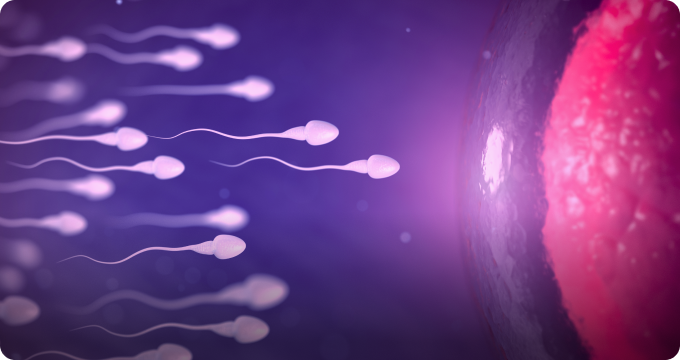
Sperm
Who may consider receiving donated sperm
There are different paths that lead here, driven by distinct clinical or family circumstances:
- Couples with a male infertility factor, when no viable sperm is available for fertilization.
- Single women pursuing solo motherhood, for whom sperm donation is part of the treatment itself.
- Female couples pursuing dual motherhood, for the same reason.
- Trans people whose capacity to produce their own sperm was affected by hormone therapy or surgical procedures.
For trans people, receiving donated sperm may be part of treatment in different situations. Learn about the TRANSGestar Program to understand this path in detail.
In all cases, each situation is evaluated individually to define the best path.
Where to start
The path varies depending on your situation.
If you're already in treatment and received a result indicating the need for donated sperm, the next step follows within your current treatment flow, guided by our multidisciplinary team.
If you're not yet a patient, the process usually begins with a conversation with our psychology team specialized in human reproduction, followed by a medical consultation. We work with national and international sperm banks, and donor characteristics are selected with your involvement and guidance from our team.
Want to know more? Contact our care team to find out what your next step is.
Frequently asked questions
Treatment varies depending on the material used.
With donated sperm, we can perform intrauterine insemination or in vitro fertilization, depending on the medical indication.
With donated eggs, the eggs are fertilized in the laboratory to form embryos. We then prepare the endometrium of the person intending to carry the pregnancy and perform the embryo transfer. This means using donated eggs requires in vitro fertilization.
With donated embryos, the process follows its own logic - speak with our team to learn more.
People with a medical indication for assisted reproduction treatment using donated material may receive eggs, sperm, or embryos.
This possibility may be considered in situations such as absent or low-quality gametes, genetic conditions, ovarian failure, early menopause, previous treatments, or solo motherhood and fatherhood plans.
Before indicating treatment, we assess the health history, reproductive plans, and condition of the person intending to carry the pregnancy.
For those intending to carry a pregnancy, the maximum age set by the Federal Council of Medicine is 50. Exceptions may be evaluated by the attending physician based on technical criteria and the patient's health condition.
The first step is to schedule a consultation with our human reproduction team.
No medical referral is required to begin private care.
During the consultation, we assess your health history, any tests already done, and your reproductive plans. Based on this assessment, we explain which treatment may be indicated, which tests will be needed, and what the next steps will be.
If you already have test results, reports, or records from previous treatments, we recommend bringing them to the consultation. There's no need to have new tests done on your own beforehand.
Yes. As a general rule, donors and recipients do not know each other’s identities.
Phenotypic characteristics and general clinical information may be provided without revealing the donor’s legal identity.
In special situations, when medically necessary, information about the donor may be provided exclusively to physicians, while the donor’s identity remains protected.
An exception to anonymity applies when gametes or embryos are donated by a relative of one of the recipients up to the fourth degree, provided this does not result in consanguinity.
In egg donation, selection is conducted by the attending physician. Among the available options, we look for the closest phenotypic match to the recipient, who must agree with the choice.
When the material comes from our gamete bank, you make the selection yourself.
It is not permitted to choose the child's sex or other biological characteristics, except when the purpose is to avoid a disease in the potential offspring.
The estimated wait is up to one year. This timeframe may vary depending on the type of material needed, availability, and the characteristics considered in the matching process.
For donated embryos, we do not have a permanent embryo-reception program - speak with our team to find out about availability in your case.
This possibility needs to be evaluated before acquiring, reserving, or transferring the material.
Our team and laboratory need to verify its origin, documentation, storage conditions, and compatibility with the planned treatment.
After this review, we advise on how the reservation and transport should be carried out, and which steps are the responsibility of the patient, the bank, the specialized carrier, and the laboratory.
We do not recommend acquiring a sample or arranging transport before this evaluation. Biological material should not be transported by the patient themselves.
Regular menstrual cycles are not required for treatment to be evaluated.
The absence of menstruation or an irregular cycle does not, on its own, determine whether a person can receive donated eggs or embryos.
The medical team will assess the uterus, endometrium, and overall health condition. Depending on the case, medications may be needed to prepare the endometrium for transfer.
The protocol and medications are not the same for every patient.
The timeline varies depending on the type of treatment, the preparation required, the body's response, and laboratory scheduling.
After the medical evaluation, we provide an estimate based on the protocol defined for your case.
It's not possible to set a single timeframe that applies to everyone.
Schedule Your Consultation
Take the next step with clarity about the possibilities available to you.
Agende sua consulta